-
-
-
-
Honor

-
-
-
-
-
Contact

-








How to Prevent Mud Leakage of Tunnel Drilling Rig
Release time:
2018-06-25
Author:
Source:
In the process of mud drilling, mud leakage is often encountered. Due to leakage, it not only increases the consumption of mud, but also causes accidents such as borehole collapse, block loss, sticking and burying. In some areas, mud leakage is often a precursor to the discovery of aquifers. Therefore, mud leakage during drilling must be carefully judged and treated separately. There are two types of mud leakage in 1. drilling. One is to drill to the general aquifer, mud slowly leakage, this is a normal phenomenon. Another situation is encountered in rock fissures or caves, a large amount of mud leakage. This section refers to the latter case. Mud leakage occurs
In the process of mud drilling, mud leakage is often encountered. Due to leakage, it not only increases the consumption of mud, but also causes accidents such as borehole collapse, block loss, sticking and burying. In some areas, mud leakage is often a precursor to the discovery of aquifers. Therefore, mud leakage during drilling must be carefully judged and treated separately.
Causes of 1. mud leakage
There are two cases of mud leakage during buried drilling. One is to drill to the general aquifer, mud slowly leakage, this is a normal phenomenon. Another situation is encountered in rock fissures or caves, a large amount of mud leakage. This section refers to the latter case.
The main causes of mud leakage are: first, improper use of mud; second, careless drilling operation; third, poor geological conditions. The leakage caused by improper use of mud is that the static water column pressure caused by mud exceeds the rock formation pressure and the gap resistance of rock formation. For example, when drilling through gravel layer, slope layer and weathered layer of bedrock, this kind of leakage often occurs, and the leakage is generally not serious. Careless drilling operation is caused by excessive lifting or lowering of drilling tools, hole repair and reaming, or poor geological conditions, or leakage caused by large formation gaps and good permeability, or cracks and karst caves in the formation. Due to different geological conditions, the degree of leakage is not the same. Sometimes a large amount of flushing fluid is consumed due to leakage, but the orifice can still return water; sometimes there is a certain water level in the hole, but the orifice cannot return water, indicating that the leakage section is on the hole wall; sometimes there is sudden leakage, and there is no water level in the hole, indicating that the hole bottom is leaking.
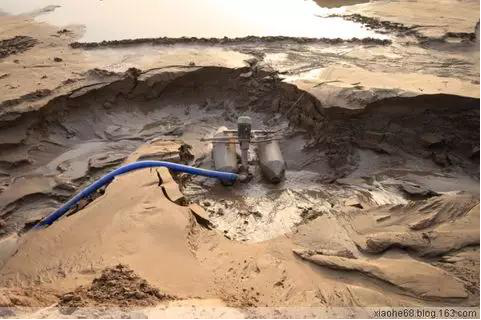
2. mud leakage
1. The liquid level of the mud pit drops, and the mud volume decreases.
2. The amount of mud returning from the borehole is reduced, and in severe cases, there is no mud entering or leaving.
Treatment of 3. Mud Leakage
1. Generally, the leakage of Quaternary strata occurs in the shallow part of the borehole. If the leakage is not serious, it can be blocked by drilling with thick mud with a viscosity of 50-60 seconds. If there is a collapse in the hole, you can throw some clay balls and continue to drill after tamping.
2. When the fracture leakage is not serious, increase the mud viscosity to 70~80 seconds, and continue drilling after properly increasing the static shear force of the mud. When the mud is no longer leaking, replace it with normal mud for drilling.
3. For serious mud leakage, in addition to appropriately increasing the mud viscosity and increasing the static shear force, clay balls can also be put into the mud or filling materials can be added to the mud to make plugging mud, such as sawdust mud, sawdust alkali agent mud, lime milk mud, cement mud, etc., to increase the flow resistance of the mud, fill cracks and achieve the purpose of plugging.
4. plugging mud
1. Lime milk slurry: add a certain amount of hydrated lime to the slurry, stir evenly, and pump it into the hole; or mix lime, sawdust and slurry in proportion, inject it into the hole, and drill it in 2-4 hours. This method is used to deal with the leakage plugging of general leakage layer and serious leakage layer such as cracks, faults and weaved fracture zone. See the following table for the proportion of lime milk slurry. When taking water from the leakage layer, acid can be used to remove plugging.
Lime milk slurry ratio
| Mud condition | Formula ratio (mud: lime: saw) | Viscosity (seconds) | Static shear force (mg/cm) | Water loss (cm/30 min) | Specific Gravity | Delivery method |
| virgin pulp | 1:00:00 | 18~20 | 6 | 20 | 1.1~1.5 | - |
| Add hydrated lime | 10:01:00 | 70~80 | - | - | Pumping | |
| Add hydrated lime | 3:01:00 | 110~120 | - | - | orifice injection | |
| Add lime and sawn | 100:2~4:1.5 | - | - | - | orifice injection |
2, sawdust alkaline agent mud: select the expansion of the larger sawdust, with caustic soda soak, added to the mud, under a certain pump pressure will be sawdust into the formation. It is suitable for dealing with mud leakage of aquifer with low confined head such as large fissure, fault and fracture zone. See the table below for the formula of sawdust alkaline mud.
Formula of sawn alkali agent mud
| Materials | Formula ratio (salty: sawn) | Soaking time (hours) | Amount added (%) | Delivery method |
| Sawn fir, poplar, birch, etc. | 2:10 | 24~48 | 20 | Water pump injection |
3. Cement slurry: 1% cement is added to the slurry, and the viscosity of the slurry will rise sharply, which is used to deal with general fracture leakage. In the fractured and broken zones with serious leakage, the mixture ratio of mud cement can be 1:0.5~1, which can be pumped into the hole after mixing evenly, and can be drilled after solidification. Cement slurry shall only be applied to the leakage layer without water intake.
5. plugging method
1. Sawdust plugging: serious leakage caused by fissures and broken strata. General mud plugging is difficult to solve the problem. Sawdust is used to deal with plugging, and the effect is visible. The specific method is: first dry the sawdust in the sun, remove the debris of sawdust, and then sort it through a sieve with 6~8 holes/cm2, and then slowly put the sawdust into the hole until the water level in the hole rises to the hole. Pause for 5~10 minutes. If the water level drops after the pump is stopped, continue to put in the sawdust for 2~3 times. If necessary, close the orifice and send water. Pump the sawdust to squeeze into the fissure layer. Then the drilling can be continued with mud to protect the hole.
2. Leakage stoppage of clay ball: mix clay and fiber materials such as sawdust, hemp knife, etc. evenly, beat them well, form balls (generally 50~80mm) according to the drilling diameter requirements, dry them in the air, put them into the orifice, and the height of each input is about 0.5~1.0 m, then continue drilling when the drilling tool is tamped. Attention should be paid during operation: find out the position of the leakage section; prevent the mud ball from getting stuck in the middle; slow speed and small pump capacity should be used for initial drilling; if the leakage section is too long, the clay ball should be put into operation in stages and tamped one by one. The total input must exceed the height of the leakage section.
3. Inject chaff and sawdust slurry: chaff and sawdust shall be sieved, the dosage shall be 10 ~ 15% of the slurry, and the viscosity of the original slurry shall be more than 30 seconds.
4. Inject cement slurry: firstly, lower the drill pipe to about 30 meters away from the top of the leakage layer, pump in a certain amount of cement slurry, replace the calculated amount of slurry, then lift the drill pipe for 20-30 meters, and clean the drill pipe with a small amount of slurry. The next step depends on the size of the leakage speed. If the leakage is serious, the cement slurry can be allowed to leak into the formation under the action of liquid injection pressure; if the leakage is not serious, the cement slurry needs to be properly pressurized to enter the leakage formation. There are two ways to pressurize: one is to shut in the well and suppress the pressure; One is cyclic pressurization. The principle of cyclic pressurization is to squeeze the cement slurry into the leakage layer by using the increased slurry flow pressure during circulation.
5. Injection of lime milk mud: first stir out ordinary mud with viscosity of 18-20 seconds, static shear force of 6 mg/cm 2, water loss of less than 20cm 2/30 minutes and specific gravity of 1.1-1.5. After the quicklime is soaked in water, it becomes powdered hydrated lime. Add the hydrated lime into the mud at the ratio of hydrated lime: mud = 1:3, and stir while adding. When all the lime is dissolved, the viscosity of the mud can reach 110~12 seconds. The slurry shall be pumped into the hole and stopped for 1~2 hours. If it is a slight leakage, the lime: mud is preferable 1:10, the mud viscosity is 70~80 seconds, the plugging effect is also good.
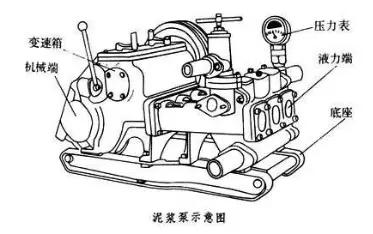
Precautions for 6. Treatment of Mud Leakage
1. After mud leakage occurs, the situation shall be analyzed in detail. For the leakage layer that is not an aquifer, one layer shall be drilled and sealed. If the leakage layer is an aquifer, it cannot be plugged, but it should be considered to be a well. If the leakage layer is water content, but it is not the purpose layer of this well, lime emulsion mud can be used to plug in order to continue drilling without damaging the aquifer.
2. When mud leakage is found, pay close attention to the leakage speed, maintain a certain liquid level in the well as possible, and take plugging measures immediately, otherwise mud leakage will cause other complicated situations. When the leakage rate is large, the method of repeatedly filling mud can be adopted to maintain a certain liquid level in the hole.
3, into the hole plugging mud, its water loss should be small, mud cake to thin. Increase the viscosity, reduce the proportion of the amplitude should not be too strong, to prevent leakage and collapse.
Preventive Measures for 7. Mud Leakage
1, in the formation of small permeability drilling, mud leakage can be prevented. The main measure is to adjust the mud performance, such as appropriately increasing the viscosity, and reducing the specific gravity under the condition of ensuring that the borehole does not collapse.
2. In the vicinity of the layer prone to leakage, the drilling speed should not be too fast, and the pump operation should not be fierce. If necessary, the mud should be circulated in sections to reduce the pump pressure of the pump and prevent the formation from leaking.
3. Before drilling through the leakage layer, it is necessary to reserve mud with more than twice the volume of the wellbore. Its performance is similar to that of the mud in the well, and its viscosity should be higher than that of the mud in the well for 5-10 seconds.
4. Prepare plugging materials, such as sawdust, chaff (sifted), clay balls, etc.
Key words: