-
-
-
-
Honor
-
-
-
-
-
Contact

-
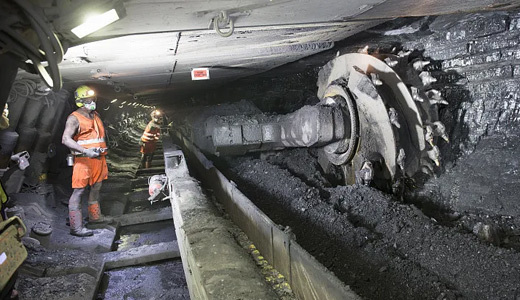







What exactly is the "heat treatment" often used in welding? Look at this watch
Release time:
2021-08-30
Author:
Source:
General Heat Treatment Name of Iron and Steel Materials Heat Treatment Process Heat Treatment Purpose 1. Annealing heats the steel to a certain temperature, keeps it for a certain period of time, and then slowly cools it to room temperature ① to reduce the hardness of the steel and improve the plasticity, so as to facilitate cutting and cold deformation ② to refine the grain, homogenize the structure of the steel, improve the performance of the steel and prepare for future heat treatment ③ to eliminate the internal stress in the steel. To prevent deformation and cracking of parts after processing, annealing category (1) complete annealing heats steel parts to the critical temperature (the critical temperature of different steels is also different, generally 710-750 ℃, and the critical temperature of individual alloy steels can reach 800-90
General heat treatment of iron and steel materials
|
Name |
heat treatment process |
Purpose of heat treatment |
|||
|
1. Annealing |
Heat the steel to a certain temperature, keep it for a certain period of time, and then slowly cool to room temperature |
① Reduce the hardness of steel, improve plasticity, in order to facilitate cutting and cold deformation processing Refine the grain, uniform the structure of the steel, improve the performance of the steel and prepare for the future heat treatment. ③ Eliminate internal stress in steel. Prevent deformation and cracking of parts after processing |
|||
|
Withdrawal Fire Class Don't. |
(1) Finish. Full Withdrawal Fire |
The steel parts are heated to a critical temperature (the critical temperature of different steels is also different, generally 710-750 ℃, and the critical temperature of individual alloy steels can reach 800-900 C) above 30-50 C, kept for a certain period of time, and then slowly cooled with the furnace (or buried in sand for cooling) |
Refine grain, uniform structure, reduce hardness, fully eliminate internal stress Complete annealing is suitable for forgings or cast steel parts with carbon content (mass fraction) below 0.8% |
||
|
(2) Ball 化 Withdrawal Fire |
Heat the steel to 20~30°C above the critical temperature, after heat preservation, slowly cool to below 500°C and then air-cooled |
Reduce the hardness of steel, improve cutting performance, and prepare for future quenching to reduce deformation and cracking after quenching. Spheroidizing annealing is suitable for carbon steel and alloy tool steel with carbon content (mass fraction) greater than 0.8% |
|||
|
(3) Go Should Force Withdrawal Fire |
Heat the steel to 500~650°C, keep it for a certain period of time, and then slowly cool down (usually cooling with the furnace) |
Eliminate the internal stress generated during welding and cold straightening of steel parts, and eliminate the internal stress generated during cutting of precision parts to prevent deformation during subsequent processing and use Stress relief annealing is suitable for all kinds of castings, forgings, weldments and cold extrusion parts. |
|||
|
2. normalizing |
Heat the steel to 40~60°C above the critical temperature, keep it for a certain period of time, and then cool it in the air. |
① Improve the organizational structure and cutting performance ② For parts that do not require high mechanical properties, normalizing is commonly used as the final heat treatment. ③ Elimination of internal stress |
|||
|
3. Quenching |
Heat the steel to the quenching temperature, hold it for a period of time, and then quickly cool it in water, salt water or oil (individual materials in air) |
① Make steel parts get higher hardness and wear resistance ② Make the steel parts get some special properties after tempering, such as high strength, elasticity and toughness. |
|||
|
quenching Fire Class Don't. |
(1) Single-liquid quenching |
The steel is heated to the quenching temperature and cooled in a quenching agent after insulation. Single liquid quenching is only suitable for carbon steel and alloy steel parts with relatively simple shape and low technical requirements. When quenching, for carbon steel parts with diameter or thickness greater than 5~8mm, brine or water cooling is selected; alloy steel parts are cooled with oil |
|||
|
(2) Two-liquid quenching |
Heat the steel to the quenching temperature, after heat preservation, quickly cool it to 300-400°C in water, and then move it to oil for cooling. |
||||
|
(3) flame surface quenching |
The flame of mixed combustion of acetylene and oxygen is sprayed on the surface of the part to quickly heat the part to the quenching temperature, and then immediately spray water on the surface of the part. The flame surface quenching is suitable for single-piece or small-batch production. The surface is required to be hard and wear-resistant, and Can withstand impact load large medium carbon steel and medium carbon alloy steel parts, such as crankshafts, gears and guide rails |
||||
|
(4) Surface induction quenching Fire |
The steel part is placed in the inductor, the inductor generates a magnetic field under the action of a certain frequency of alternating current, and the steel part generates an induced current under the action of the magnetic field, so that the surface of the steel part is rapidly heated (2-lOmin) to the quenching temperature, and water is immediately sprayed onto the surface of the steel part. After surface induction hardening parts, the surface is hard and wear-resistant, while the core maintains good strength and toughness. Surface induction hardening is suitable for medium carbon steel and alloy steel with medium carbon content. |
||||
|
4. Tempering |
Heat the quenched steel below the critical temperature, hold it for a period of time, and then cool it in air or oil Tempering is carried out immediately after quenching and is the last process of heat treatment. |
① Obtain the required mechanical properties. Under normal circumstances, the strength and hardness of the parts after quenching are greatly improved, but the plasticity and toughness are significantly reduced, and the actual working conditions of the parts require good strength and toughness. After selecting an appropriate tempering temperature for tempering, the required mechanical properties can be obtained ② Stable organization, stable size ③ Elimination of internal stress |
|||
|
(1) Low temperature tempering |
The hardened steel parts are heated to 150-50°C, and held at this temperature for a certain period of time, and then cooled in the air. Low-temperature tempering is mostly used for cutting tools, measuring tools, molds, rolling bearings and carburized parts. |
Eliminate the internal stress of steel due to quenching |
|||
|
Class Don't. |
(1) medium temperature tempering |
Heat the quenched steel to 350~450%, and cool it down after a period of time. It is generally used for all kinds of springs and hot stamping dies and other parts. |
The steel to obtain a higher elasticity, a certain degree of toughness and hardness |
||
|
(1) high temperature tempering |
The quenched steel parts are heated to 500~650°C, and cooled after heat preservation. They are mainly used for important structural parts that require high strength and high toughness, such as spindles, crankshafts, cams, gears and connecting rods, etc. |
The steel to obtain better comprehensive mechanical properties, that is, high strength and toughness and sufficient hardness, to eliminate the steel due to quenching and internal stress |
|||
|
5. Quenching and tempering |
The quenched steel parts are tempered at high temperature (500~600°C) and are mostly used for important structural parts, such as shafts, gears, connecting rods and other quenching and tempering are generally carried out after rough machining. |
Grain refinement, so that the steel to obtain high toughness and sufficient strength, so that it has good comprehensive mechanical properties. |
|||
|
6.WhenEffectDivisionLi |
(1) Artificial aging |
The quenched steel is heated to 100~160 ℃, after a long time of insulation, and then cooled. |
Eliminate internal stress, reduce part deformation, and stabilize dimensions. It is more important for parts with higher precision requirements |
||
|
(2) Natural aging |
Place castings in the open air; steel parts (such as long shafts, lead screws, etc.) placed in sea water or long-term suspension or gently tapping to be naturally aged parts, it is best to roughing first |
||||
|
7. Chemical heat treatment |
Put the steel parts into a chemical medium containing some active atoms (such as carbon, nitrogen, chromium, etc.), and make some atoms in the medium penetrate into the surface of the steel parts by heating, heat preservation, cooling and other methods, so as to change the chemical composition of the surface of the steel parts and make the surface of the steel parts have some special properties. |
||||
|
化 Learning Heat Division Li |
(1) Steel-permeable carbon |
Infiltration of carbon atoms into the surface of steel parts Commonly used in wear-resistant and impact parts, such as: wheels, gears, shafts, piston pins, etc. |
The surface has high hardness (HRC60 ~ 65) and wear resistance, while the center still maintains high toughness |
||
|
(2) nitrogen seepage of steel |
Penetration of nitrogen atoms into the surface of steel parts Commonly used in important bolts, nuts, pins and other parts |
Improve the hardness and wear resistance of the surface of steel parts, Corrosion resistance |
|||
|
Class Don't. |
(3) Cyanidation of steel |
The simultaneous penetration of carbon and nitrogen atoms into the surface of steel parts is suitable for low carbon steel, medium carbon steel or alloy steel parts, and can also be used for high-speed steel tools. |
Improving the hardness and wear resistance of the surface layer of steel parts |
||
|
8. Black |
The metal parts in a very concentrated alkali and oxidant solution heating oxidation, so that the surface of the metal parts to generate a layer of magnetic iron oxide film is often used in low carbon steel, low carbon alloy tool steel Due to the influence of materials and other factors, the film color of the blackening layer is blue-black, black, red-brown, tan, etc., and its thickness is 0.6 ~ O.8µm |
Anti-rust, increase the beauty and luster of the metal surface, and eliminate the stress during quenching
|
|||
Key words:
This, quenching, parts, cooling, heating, heat preservation, surface, tempering, hardness, elimination