-
-
-
-
Honor
-
-
-
-
-
Contact

-
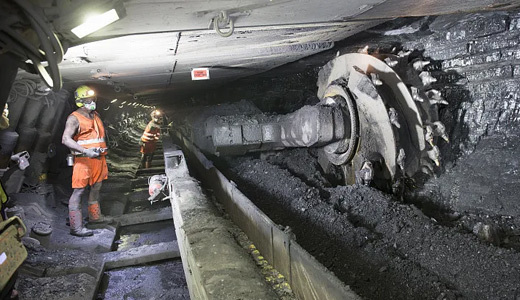







Welding cracks are very difficult to do, these causes and their prevention and control methods are solved at one time.
Release time:
2021-09-27
Author:
Source:
Welding crack is divided into its essence, can be divided into hot crack, reheat crack, cold crack, lamellar tear and so on. The following only on the causes of various cracks, characteristics and prevention methods for specific elaboration. 1. Hot crack is produced at high temperature during welding, so it is called hot crack, which is characterized by cracking along the original austenite grain boundary. According to the different materials of the welding metal (low alloy high strength steel, stainless steel, cast iron, aluminum alloy and some special metals, etc.), the form, temperature range and main reasons of the hot crack are also different. At present, the thermal crack is divided into three categories: crystallization crack, liquefaction crack and multilateral crack. 1) Crystal crack main
Welding crack is divided into its essence, can be divided into hot crack, reheat crack, cold crack, lamellar tear and so on. The following only on the causes of various cracks, characteristics and prevention methods for specific elaboration.
1. Hot crack
It is produced at high temperature during welding, so it is called hot crack, which is characterized by cracking along the original austenite grain boundary. According to the different materials of the welding metal (low alloy high strength steel, stainless steel, cast iron, aluminum alloy and some special metals, etc.), the form, temperature range and main reasons of the hot crack are also different. At present, the thermal crack is divided into three categories: crystallization crack, liquefaction crack and multilateral crack.
1) Crystallization cracks are mainly produced in the welds of carbon steel and low alloy steel (containing S,P,C,Si on the high side) and single-phase austenitic steel, nickel-based alloy and some aluminum alloy welds. This crack is in weldingseamDuring the crystallization process, near the solidus, due to the shrinkage of the solidified metal, the residual liquid metal is insufficient and cannot be filled in time, and the intergranular cracking occurs under the action of stress.
Prevention and control measures are:In terms of metallurgical factors, properly adjust the composition of the welding metal, shorten the range of brittle temperature zone to control the content of sulfur, phosphorus, carbon and other harmful impurities in the welding;seamMetal primary grain, that is, appropriate addition of Mo, V, Ti, Nb and other elements; In terms of process, it can be prevented by preheating before welding, control line energy, reducing joint restraint, etc.
2) The liquefaction crack in the near seam zone is a kind of micro crack cracking along the austenite grain boundary, which is small in size and occurs in the near seam zone or interlayer of HAZ. Its cause is generally due to welding near the seam area metal or weld interlayer metal, at high temperature so that these areas of the austenite grain boundary of the low-melting eutectic composition is re-melted, under the action of tensile stress along the austenite intergranular cracking and the formation of liquefaction cracks.
This kind of crack prevention measures and crystal cracks are basically the same. Especially in metallurgy, it is very effective to reduce the content of low-melting eutectic composition elements such as sulfur, phosphorus, silicon and boron as much as possible, and in the process, it can reduce the line energy and reduce the concavity of the fusion line of the molten pool.
3) Multilateralization cracks are caused by low plasticity at high temperatures during the formation of multilateralization. This kind of crack is not common, and its prevention and control measures can be added to the weld to improve the multilateral activation energy of elements such as Mo, W, Ti and so on.
2. Reheat crack
Usually occurs in some steel and high temperature alloys containing precipitation strengthening elements (including low alloy high strength steel, pearlite heat resistant steel, precipitation strengthening high temperature alloy, and some austenitic stainless steel), they did not find cracks after welding, but produced cracks in the heat treatment process. The reheat crack is generated in the superheated coarse grain part of the welding heat affected zone, and its direction is the expansion of the austenite coarse grain boundary along the fusion line.
Prevention and control of reheat cracks from the material selection, you can choose fine grain steel. In terms of process, select smaller line energy, select higher preheating temperature and cooperate with later thermal measures, and select low-matching welding materials to avoid stress concentration.
3. Cold crack
It mainly occurs in the welding heat affected zone of high and medium carbon steel, low and medium alloy steel, but some metals, such as some ultra-high strength steel, titanium and titanium alloys, sometimes cold cracks also occur in the weld.In general, the hardening tendency of steel, the hydrogen content and distribution of welded joints, and the restraint stress state of the joints are the three main factors that cause cold cracks in high-strength steel welding.The martensite formed after welding is under the action of hydrogen and combined with tensile stress to form a cold crack.ItThe formation of is generally transcrystalline or transcrystalline.Cold cracks are generally divided into weld toe cracks, cracks under the weld bead, and root cracks.
The prevention and control of cold cracks can be started from three aspects: the chemical composition of the workpiece, the selection of welding materials and process measures. Materials with lower carbon equivalent should be selected as much as possible; low hydrogen electrodes should be selected for welding materials, low strength matching should be applied for welding seams, and austenitic welding materials can also be used for materials with high cold cracking tendency. Reasonable control line energy, preheating and post-heat treatment are the technological measures to prevent cold cracking.
In the welding production due to the use of steel, welding materials are different, the type of structure, steel, and the specific conditions of the construction of different, there may be various forms of cold cracks. However, it is mainly delayed cracking that is often encountered in production.
There are three forms of delayed cracking:
1) weld toe crack-this crack originates from the junction of the base metal and the weld, and has obvious stress concentration. The direction of the crack is often parallel to the weld bead, generally starting from the weld toe surface to the depth of the base metal.
2) cracks under the weld bead-this kind of crack often occurs in the welding heat affected zone with high hardening tendency and high hydrogen content. In general, the crack direction is parallel to the fusion line.
3) Root crack-this kind of crack is a common form of delayed crack, which mainly occurs in the case of high hydrogen content and insufficient preheating temperature. This kind of crack is similar to the weld toe crack and originates from the part of the weld root where the stress concentration is large. Root cracks may occur in the coarse-grained segment of the heat-affected zone or in the weld metal.
The hardening tendency of steel, the hydrogen content and distribution of welded joints, and the restraint stress state of the joints are the three main factors that cause cold cracking during welding of high strength steels. These three factors are interrelated and mutually reinforcing under certain conditions.
The hardening tendency of steel is mainly determined by chemical composition, plate thickness, welding process and cooling conditions. During welding, the greater the hardening tendency of the steel grade, the easier it is to crack. Why does steel hardening cause cracking? Can be summarized in the following two aspects.
A: The formation of brittle and hard martensite structure-martensite is a supersaturated solid solution of carbon in alpha iron. Carbon atoms exist in the crystal lattice as interstitial atoms, which makes the iron atoms deviate from the equilibrium position, and the crystal lattice is greatly distorted, resulting in the hardening of the organization. Especially under welding conditions, the heating temperature near the seam zone is very high, so that the austenite grains grow up seriously, and when rapidly cooled, the coarse austenite will transform into coarse martensite. From the strength theory of metal, it can be known that martensite is a brittle and hard structure, which will consume lower energy when it breaks. Therefore, when there is martensite in welded joints, cracks are easy to form and expand.
B: Hardening will form more lattice defects-the metal will form a large number of lattice defects under the condition of thermal imbalance. These lattice defects are mainly vacancies and dislocations. With the increase of thermal strain in the welding heat affected zone, under the condition of stress and thermal imbalance, vacancies and dislocations will move and gather. When their concentration reaches a certain critical value, the crack source will be formed. Under the continuous action of stress, it will continue to expand and form a macro crack.
Hydrogen is one of the important factors causing cold cracking in high strength steel welding, and has the characteristics of delay. Therefore, the delayed cracking caused by hydrogen is called "hydrogen induced cracking" in many literatures ". Experimental studies have shown that the higher the hydrogen content of high-strength steel welded joints, the greater the sensitivity of cracks. When the hydrogen content in local areas reaches a certain critical value, cracks begin to appear, which is called the critical hydrogen content of cracks [H]cr.
The [H]cr value of cold cracking of various steels is different, which is related to the chemical composition of the steel, the degree of steel, the preheating temperature, and the cooling conditions.
1: When welding, the moisture in the welding material, the rust, oil stain and environmental humidity at the groove of the welding part are the reasons for the rich hydrogen in the weld. Under normal circumstances, the amount of hydrogen in the base metal and welding wire is very small, while the moisture in the electrode coating and the moisture in the air can not be ignored, becoming the main source of hydrogen.
2: The solubility and diffusion ability of hydrogen in different metal tissues are different, and the solubility of hydrogen in austenite is much greater than that in ferrite. Therefore, at the time of transformation from austenite to ferrite during welding, the solubility of hydrogen suddenly decreases. At the same time, the diffusion rate of hydrogen is just the opposite, and the transition from austenite to ferrite suddenly increases.
Under the action of high temperature during welding, a large amount of hydrogen will be dissolved in the molten pool. In the subsequent cooling and solidification process, due to the sharp decrease of solubility, hydrogen will escape as much as possible, but due to the rapid cooling, hydrogen will not be able to escape and will remain in the weld metal to form diffusive hydrogen.
4. Lamellar tear
Is a kind of internal low temperature cracking. It is limited to the base metal or weld heat affected zone of thick plate, and mostly occurs in "L", "T" and "" type joints. It is defined as a stepped cold crack that occurs in the base metal due to insufficient plasticity of the rolled thick steel plate along the thickness direction to withstand the welding shrinkage strain in that direction. Generally due to the thick steel plate in the rolling process, some of the non-metallic inclusions in the steel rolled into parallel to the rolling direction of the strip inclusions, these inclusions caused by the steel plate in the mechanical properties of the guide. To prevent lamellar tearing, refined steel can be selected for material selection, I .e. steel plate with high z-direction performance can also be selected to improve the joint design form, avoid unilateral welds, or make grooves on the side bearing z-direction stress.
Unlike cold cracking, lamellar tearing is independent of the strength level of the steel, but is mainly related to the amount and distribution of inclusions in the steel. Generally rolled thick steel plates, such as low carbon steel, low alloy high strength steel, and even aluminum alloy plates will also appear lamellar tearing. According to the location of lamellar tearing, it can be divided into three categories:
The first type is lamellar tearing induced by cold cracks in the weld toe or root in the weld heat affected zone.
The second category is the welding heat affected zone along the inclusion cracking, is a common engineering lamellar tearing.
The third type of cracking along inclusions in the base metal away from the heat-affected zone is generally found in thick plate structures with more MnS sheet inclusions.
The shape of the lamellar tear is closely related to the type, shape, distribution and location of the inclusion. When the sheet MnS inclusion is dominant along the rolling direction, the lamellar tearing has a clear ladder shape, when the silicate inclusion is dominant, it is linear, such as the Al inclusion is dominant, it is irregular ladder shape.
When welding thick plate structures, especially T-shaped and angle joints, under the condition of rigid restraint, large tensile stress and strain will be generated in the thickness direction of the base metal when the weld shrinks. When the strain exceeds the plastic deformation capacity of the base metal, the inclusion and the metal matrix will be separated and micro-cracks will occur. Under the continuous action of stress, the crack tip will expand along the plane where the inclusion is located, this is what we call a "platform".
There are many factors that affect lamellar tearing, mainly in the following aspects:
1: The type, quantity and distribution of non-metallic inclusions are the essential causes of lamellar tearing, which is the root cause of the anisotropy and mechanical properties of steel.
2:Z-direction constraint stress Thick-walled welded structures bear different Z-direction constraint stresses, post-weld residual stresses and loads during the welding process, which are the mechanical conditions that cause laminar tearing.
3: The influence of hydrogen It is generally believed that hydrogen is an important influencing factor in the vicinity of the heat-affected zone, induced by cold cracking into lamellar tearing.
Because the influence of lamellar tearing is very large and the harm is very serious, it is necessary to make a judgment on the sensitivity of steel lamellar tearing before construction.
The commonly used evaluation methods are the Z-direction tensile section shrinkage and the Z-direction critical stress method of the bolt. In order to prevent lamellar tearing, the reduction of area should not be less than 15%, generally = 15 ~ 20% is appropriate, when 25%, it is considered that the resistance to lamellar tearing is excellent.
Measures should be taken to prevent lamellar tearing mainly from the following aspects:
First, refined steel is widely used in molten iron desulfurization method, and vacuum degassing can be used to smelt ultra-low sulfur steel with sulfur content of only 0.003~0.005%, and its section shrinkage rate (Z direction) can reach 23 ~ 25%.
Second, the morphology of sulfide inclusions is controlled by changing MnS into sulfides of other elements, making it difficult to stretch during hot rolling, thereby reducing anisotropy. The currently widely used additive elements are calcium and rare earth elements. After the above treatment of steel, can produce Z to section shrinkage rate of 50 ~ 70% of the lamellar tear resistant steel plate.
Third, from the perspective of preventing laminar tearing, the design and construction process is mainly to avoid Z-direction stress and stress concentration. The specific measures are as follows:
1) One-sided welds should be avoided as far as possible, and double-sided welds can be used to relax the stress state of the root area of the weld to prevent stress concentration.
2) Use symmetrical fillet welds with a small amount of welding instead of full penetration welds with a large amount of welding to avoid excessive stress.
3) The groove shall be opened on the side bearing the stress in Z direction.
4) For T-joints, a layer of low-strength welding material can be surfacing on the horizontal plate in advance to prevent weld root cracks and at the same time to alleviate welding strain.
5) In order to prevent lamellar tearing caused by cold cracking, some measures to prevent cold cracking should be adopted as much as possible, such as reducing the amount of hydrogen, appropriately increasing the preheating, and controlling the inter-layer temperature.
This article comes from the network, compiled and published by Yikuang Technology..
Key words:
Get, crack, weld, stress, lamellar, tear, weld, metal, austenite, effect
Next Page
Next page: