-
-
-
-
Honor

-
-
-
-
-
Contact

-
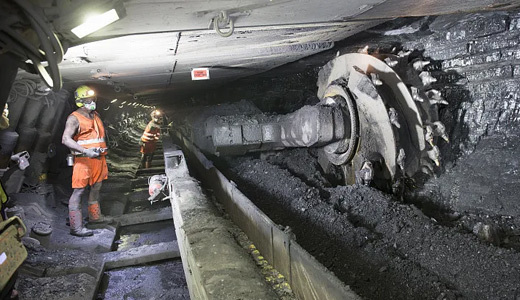







Safety operation skills related to coal mine tunneling workers-drilling safety operation skills
Release time:
2023-01-05
Author:
Source:
Safety operation skills related to coal mine tunneling workers-drilling safety operation skills
Drilling safety operation skills
(I) General Provisions
(1) This operation procedure is applicable to the personnel who use pneumatic drilling machine and hydraulic drilling machine to carry out the drilling work.
(2) Drillers must undergo professional technical training and pass the examination before taking up their posts.
(3) Drillers must carefully study the safety regulations, operation regulations and construction measures, master the technical parameters such as hole arrangement, eye depth, eye distance and angle in the operation regulations, and strictly follow the provisions of the operation regulations to ensure that the blasting effect meets the requirements of the operation regulations. Master the structure, performance and use method of the drilling machine; when the drilling machine fails in operation, it should be able to repair or replace immediately.
(4) In front of the drill, first check the safety situation of the drilling site, "knock on the help and ask for the top", reinforce the support, and no empty roof operation is allowed;
(5) During the drilling process, there must be a special person to monitor the safety of the jacking and pay attention to the drilling situation.
(6) Wet drilling must be adhered. Dry drilling can be used when wet drilling cannot be used for excavation in water-swelling rock formations, but dust prevention measures must be taken and individual dust protection articles must be used.
(7) Parallel operation of drilling and charging is strictly prohibited, and drilling along cracks and in residual eyes is strictly prohibited.
Drilling is not allowed under any of the following circumstances, and the operation can only be carried out after treatment: ① when the gas concentration within 20m near the heading face reaches 1%, or when the local accumulated gas concentration reaches 2%, and when other harmful gases exceed the provisions of the Coal Mine Safety Regulations; ② When the local ventilator stops running, the air volume in the working face does not meet the provisions of the operating regulations, or the distance between the air duct mouth and the working face exceeds the operating regulations; ③ water in the water supply pipe, when the dust-proof facilities are incomplete or the dust-proof facilities are damaged or invalid; ④ When the working face fails to handle the explosion and residual explosion (except when handling the misfire); ⑤ When there are signs of coal and gas outburst; ⑥ When there are signs of water permeability in the working face (red, sweat, fog, water call, increased roof drenching, cold air, roof pressure, floor bulging or fissure water gushing, muddy water color and odor, etc.); ⑦ When drilling holes in coal seams with rock burst, if it is found that the amount of coal and rock powder in the hole increases, the coal and rock powder cannot be discharged under normal water supply conditions, card drill, hole blasting, blunt drilling, frequent coal cannon, deformation of support, bottom drum and other serious signs of ground pressure impact; ⑧ When the floating coal and gangue to be cleaned up in the tunneling face are not cleaned up or the accumulated water is not removed; ⑨ When drilling suddenly penetrates into goaf or old roadway (except for normal penetration);⑩ Other unsafe hidden dangers are not eliminated.
(9) When abnormal phenomena such as loose coal and rock, flake, pressure or pressure water in drilling, sudden increase in water volume, and harmful gas gushing are found, drilling must be stopped, power supply must be cut off, drill pipe must not be pulled out, and report to relevant departments in time for handling. Staff shall be immediately evacuated to all locations.
(10) When it is found that the drill bit alloy pieces fall off, the drill pipe is bent or the center hole does not lead to water, the drill bit or drill pipe must be replaced in time.
(11) When drilling holes in the inclined working face with a large inclination angle, a solid and reliable scaffold or workbench should be set up, and the staff should wear safety belts when necessary. Baffles must be set in the roadway to prevent personnel from sliding down and coal and rock rolling to hurt people, and cables, wind and water pipes must be fixed.
(12) Drill holes strictly according to the calibrated eye position and the angle, depth and number of holes specified in the blasting instructions. Where there are cut holes drilled through each other or unqualified holes, they must be drilled again.
(13) Pay attention to the situation of coal and rock gang and roof at any time during drilling. When potential safety hazards of gang and roof fall are found, work must be stopped immediately, personnel must be removed, and treatment shall be carried out from back to front. Construction shall be resumed after confirming that there is no danger.
(14) When there is dust in the drill hole, stop drilling, check whether there is water in the water pipe, whether the center hole of the drill bit and drill pipe is unblocked, and then drill the hole after treatment.
(15) In the process of drilling, when abnormal conditions are found in the parts and facilities of the drilling machine, the drilling must be stopped.
(16) When drilling, the drill pipe should not swing up and down, left and right to maintain the drilling direction; Do not stand in front of the drilling machine and under the drill pipe to avoid the drill pipe breaking and hurting people.
(17) When drilling the bottom hole in the downward inclined roadway working face, after the drill pipe is pulled out, the hole opening shall be blocked with objects in time to prevent the hole from being blocked by coal and rock powder.
(18) For the construction of large cross-section roadway, a firm and reliable workbench must be erected, or measures such as step working face construction and slag pushing drilling must be adopted.
(19) When tunneling is close to special sections such as goaf, old roadway and roadway penetration, drilling must be carried out according to the special measures specified in the operation regulations.
(20) The electric drill must have the "MA" mark. Before entering the well, the inspector of explosion-proof electrical equipment shall check its explosion-proof performance and confirm that the explosion-proof performance is good before entering the well.
(21) When using an electric drill, comprehensive protection devices such as leak detection, short circuit, overload, remote start and stop, and automatic power failure must be provided and used.
(22) When using a hydraulic drilling rig, it is necessary to: ① It is strictly prohibited to mix two or more kinds of hydraulic grease, and it is strictly prohibited to use non-hydraulic grease to prevent damage to the seals of the drilling rig and pump station; ② It is strictly prohibited to reverse the hydraulic motor; ③ If the drill is stuck, stopped or the drill pipe is bent during drilling, it should be retracted immediately and the advancing speed should be readjusted. ④ The oil filling hole should be filled regularly to avoid damaging the bearing.
(II) operation sequence (1) to check the safety of the construction site. (2) Prepare drilling equipment and tools, test run, and calibrate the eye position. (3) Drill the hole. (4) Withdraw equipment and tools.
Preparation for (III) Operation
(1) In front of the drill, it is necessary to "knock on the help and ask for the top". When there are dangerous rocks and suspended coal gangue, it should be handled in time. The drill hole must be carried out under the cover of temporary support or under the condition of complete support.
(2) The used drilling tools, such as pneumatic rock drill, pneumatic coal drill, electric coal drill, hydraulic drill, drill pipe and drill bit, shall be prepared before drilling. The drill pipe should be straight, the water pinhole should be straight, and the drill bit should be sharp and intact.
(3) The pressure air pipe, water supply pipe and power supply shall be transported to the vicinity of the heading face to ensure the convenient, normal and safe use of wind, water and electricity.
(4) to hit the eyes to achieve "three tight" and "two don't", that is, cuffs, neckline, tight corners, do not wear gloves, do not expose the towel outside the collar.
(5) The following inspections shall be carried out in front of the pneumatic drill: ① Before the pneumatic drill is connected to the air and the water pipe, check whether there are dirt and sundries in the pipe orifice, and blow clean with air and water if any. Check whether the wind and water pipelines are intact and smooth, and whether the joints are firmly connected; ② Whether the parts are complete, whether the screws are fastened, and whether the water needle is qualified; ③ The oil injector shall be filled with grease according to regulations, the grease shall be cleaned, and the oil valve shall be adjusted and tested. ④ Whether the drill pipe is straight, whether the drill bit is firmly installed, whether the drill pipe center hole and the drill bit outlet hole are unblocked, and whether the drill tail are qualified; ⑤ whether the sound is normal, whether each operating handle is flexible and reliable, whether there is air leakage or water leakage, and whether the lifting of the drill frame is flexible; ⑥ When drilling deep holes, it is necessary to match the long and short sets of drill holes and corresponding drill bits. (6) When using the hydraulic drilling rig to drill, the following checks should be carried out: ① Check whether each component of the hydraulic bolter is sensitive and reliable; ② Check whether the connection of the hydraulic pipe joint is reliable; ③ Check the oil level of the oil tank, and it is strictly forbidden to work under the lowest oil level line;
(IV) normal operation
1. Drilling with pneumatic drill (pneumatic rock drill)
(1) Calibrate the eye position and divide the blocks. ① Mark the eye position according to the requirements of the middle and waist lines and the hole layout drawings; ② When drilling with multiple pneumatic drills, divide the blocks to ensure that the person, drill, eye, location and responsibility are fixed, and cross operation is not allowed; ③ Determine the drilling depth according to the requirements of the blasting chart, and mark the drill pipe to ensure that the fundus (except the cutting hole) falls on the same plane;
(2) Commissioning. The test run shall be conducted in the order of boiling water first and then opening air.
(3) The eyes.
4) Open your eyes. Open the pneumatic drill control valve to the light operation position, and after the eye position is stable and the pilot drill of 20~30mm is evacuated, pull the control valve to the middle operation position to drill until the drill bit is not easy to get out of the eye opening, and then drill at full speed;
(5) Normal drilling.
(6) Stop drilling.
2. Drilling holes of pneumatic coal drill (pneumatic anchor rod machine) (1) According to the requirements of the middle and waist lines and blast hole layout drawings, mark the eye positions (2) When two or more electric drills drill holes, divide the blocks and do not cross operations. (3) Test run: boiling water, power supply (air supply) and test run. (4) Eye point: use a hand pick to point the eye to locate, and dig out the eye socket, the drill bit gently touches the coal wall, and start the handle switch. (5) Drilling: After the drill bit drills into the coal body, adjust the direction and angle of drilling according to the provisions of the operation regulations; When pushing, it should be evenly pushed hard, not too hard, and should be pushed along the way. Pull the drill pipe back and forth at regular intervals to eliminate pulverized coal. (6) Stop drilling: After drilling deep enough, the drill pipe must be pulled back and forth several times to drain the pulverized coal in the eye.
3. Test run of the drill hole of the hydraulic drilling rig (1): open the outrigger control valve to make the outriggers rise slowly, and all the outriggers at all levels are extended. Then turn off the leg control valve and retract the leg, so that the leg rises and falls 3 times; open the motor control valve to make the motor idle and check the rotation of the motor; open the leg and the motor control valve at the same time to make the leg rise synchronously with the rotation of the motor; open the water control valve and observe whether there is water flowing out of the drill pipe connection sleeve. (2) After confirming that the no-load test is normal, install the drill pipe and start drilling. When the eyes are opened, after the lead driller grasps the drill rod with both hands, the operator opens the leg control valve, so that the leg slowly rises and the drill bit reaches the eye position of the roof. Open the water control valve to supply water to the drill pipe; then open the motor control valve to make the motor rotate slowly, and control the rotation speed and propulsion speed to open the hole; when the drill bit drills into the rock (coal) for 20~30mm, stop the rotation. After the drill leader withdraws to a safe place, adjust the rotation speed and propulsion speed to drill at the normal drilling speed; after drilling, make the motor rotate slowly, close the outrigger control valve. When the legs fall back, the drill pipe falls down immediately; when the legs are fully retracted, close the motor control valve and then close the water valve. If the drilling depth of the first drill pipe does not meet the requirements, the long drill pipe should be replaced. Continue drilling according to the above procedure until the hole depth is as required.
(V) finishing work (1) After drilling with pneumatic drill, the drilling tools and facilities shall be withdrawn from the working face and stored in a safe place, the air and water pipe valves shall be closed, and the hose trays shall be put in order; (2) After drilling with hydraulic drilling rig, the rock dust on the drilling rig must be washed clean and placed in the designated position.
Key words: