The drizzle is swirling, and I feel my kindness. Tomb Sweeping Day


Release time:

2023-04-05

Author:

Source:

The History of Qingming Festival
Qingming was originally just the name of a solar term, which became a festival to commemorate ancestors and was related to the integration of the Cold Food Festival. According to legend, in the Spring and Autumn Period, the Duke of Jin Wen commemorated the death of his loyal minister Jie Zizhi who died in the fire and named his death day as the Cold Food Festival, and the following day was designated as the "Ching Ming Festival".
In ancient times, cold food was also called "no smoking festival" and "cold festival". On 105 days after the winter solstice in the summer calendar and the day before the Qingming Festival, it was a festival with the theme of remembrance and gratitude. Qingming is the day of spring outing.
Tomb-sweeping began to prevail in the Tang Dynasty. The date of tomb-sweeping in the Tang Dynasty was generally on the Cold Food Festival, and Emperor Xuanzong of the Tang Dynasty ordered "Cold Food to the Tomb". Because of cold food and Qingming, with the migration of time, the custom of cold food festival gradually integrated into the Qingming Festival. In the Song and Yuan Dynasties, Qingming gradually formed a traditional festival centered on ancestor worship and tomb sweeping, integrating cold food customs with activities such as outing.
People have to go to the countryside to visit their graves during the Qingming Festival. While mourning their ancestors, they also rode through the bright spring scenery. Therefore, the Qingming Festival is also known as the outing festival.

On this day, people in the tomb sweeping at the same time, but also accompanied by outing activities. Therefore, the Qingming Festival has both the sentimental feelings of being cautious and chasing far away, and the festive atmosphere of joy and spring.
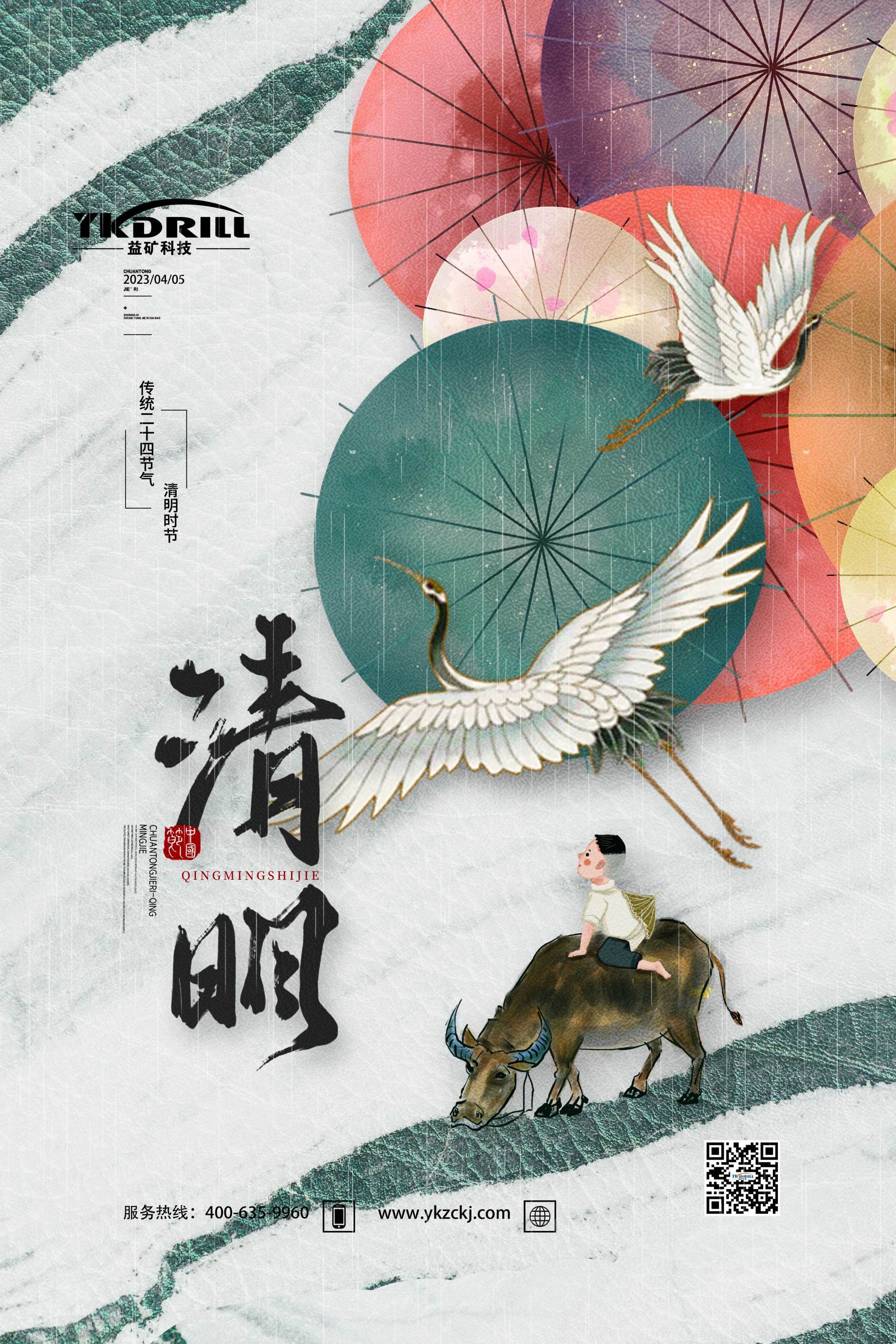
 

The solar term of Qingming Festival
Qingming Festival is one of the 24 solar terms in the lunar calendar. It falls at the turn of mid-spring and late spring, that is, 105 days after the winter solstice. "Almanac": "On the 15th after the vernal equinox, Dou refers to Ding, for Qingming, when everything is clean and clear, when the cover is clear and clear, everything is obvious, hence the name."
"Qingming wind" is a refreshing and clean wind. "At the age of 100 questions" said, "at this time of growth, all things are clean and clear. Therefore, it is called Qingming. When Qingming arrives, the temperature rises, which is a good time for spring ploughing and spring planting. Therefore, there are agricultural proverbs such as "planting melons and beans before and after Qingming Festival" and "planting trees and afforestation are better than Qingming Festival. The twenty-four solar terms are the climate laws summarized by ancient Chinese astronomers and people in their life and production practices. They more appropriately reflect the changes in temperature, phenology, and rainfall throughout the year.
It has an indispensable guiding significance for people to arrange farming, sericulture and other activities according to time. By the Qingming Festival, the temperature is getting warmer and the rainfall is increasing, which is a good time for spring ploughing and planting.
 
Qingming Festival has a long history, and the folk customs are also rich and colorful!
1. Tomb Sweeping for Ancestors
Tomb-sweeping is called "respect for the time of thinking" to the ancestors ". There are generally two forms of ancestor worship: one for the family and the other for the tomb.
Family sacrifice, that is, offering sacrifices at home or offering sacrifices to ancestors in the ancestral temple; tomb sacrifice, that is, going to the tomb cemetery to offer sacrifices to ancestors. On the grave grave offering, one is to pay tribute, the other is to sweep the weeds on the grave to show that there are successors, and the incense continues.
The date of the Qingming Festival is different from place to place. Some are ten days before and after the Ching Ming Festival, some are "top three" and "last three", some are held on a single day before and after the Ching Ming Festival, and some places even have tomb-sweeping activities as long as a month.
2, the outing
The outing is also called spring exploration and spring search. When the spring is warm and the flowers are blooming, they travel in teams, and feel the breath of spring while mourking their ancestors.
The custom of outing has a long history in our country. Du Fu once recorded the scene of spring outing in his poem, "The weather is new on March 3, and there are many beautiful people by the water in Chang'an". The folk have always been exquisite about outing. Whenever the grass is yiyi and the clear water is rippling, people take off their long cloth shirts, go out of their homes, and go to the countryside and mountains in groups to enjoy the scenery.
3. Fly a kite
Flying kites is also a favorite activity during the Qingming Festival. During the Qingming Festival, people put it not only during the day but also at night. At night, strings of colorful lanterns are hung under the kite or on the wind steady pull line, like flashing stars, which are called "magic lamps".
In the past, after some people put kites into the blue sky, they cut the strings and let the breeze send them to the ends of the earth. It is said that this can eliminate diseases and disasters and bring good luck to themselves.
4. Silkworm Flower Meeting
"Silkworm Flower Festival" is a unique folk culture in Silkworm Township. In the past, during the Qingming Festival, Wutong, Wuzhen, Chongfu and other places had this folk activity.
 

Key words:


Copyright©2024 Shandong Yikuang Drilling Technology Co., Ltd.

Business License

Powered by:300.cnSEO Tags