-
-
-
-
Honor
-
-
-
-
-
Contact

-



Yikuang Science and Technology Summarizes Four Drill Pipe Accident Treatment Methods
Release time:
2019-07-24
Author:
Source:
Shandong Yikuang Drilling Technology Co., Ltd. produces all kinds of geological drill pipes, spiral drill pipes, triangular heavy-duty grooved drill pipes, special-shaped multi-angular grooved drill pipes, coal drill pipes, drill bits, drill pipes, etc., with complete specifications! Strength manufacturers, trustworthy! company set research and development-production-sales-sales as one, welcome customers to purchase, tel: 0635-2311078
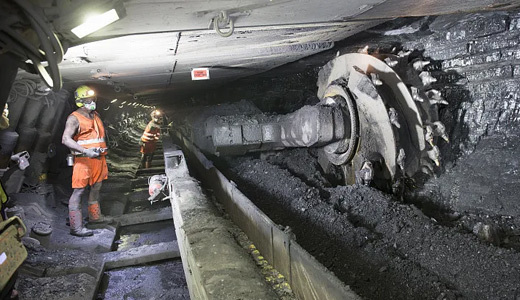
Common drill pipe accidents are mainly divided into: drill drop, stuck drill, clamp drill, buried drill, the followingBeneficial Mining TechnologyI would like to share with you the treatment methods for the above four kinds of drill pipe accidents.
drill pipe
1. drop drill
Fault description: in the process of rotary drilling, the last section of drill pipe will be used when drilling deep pile foundation, and sometimes the drill pipe will be broken, but the probability is very small, resulting in the remaining drill pipe and drill bucket being left in the hole, including the drill pipe quality reason or geological strength reason and operation reason, etc.
Processing method:
1. Diving: If the pile diameter is large enough and conditions permit, the diver can hang the wire rope after handling the sink. This method can be salvaged, but the cost is higher.
2. Lower sleeve: Use steel bars to make a shaped skeleton, then use grid rope to set the wire rope sleeve, use the rope to set the three points on the skeleton to keep the lowering balance, and then put the skeleton and wire rope down the hole together.
3. Detection: Before setting down the drill pipe, the depth of the hole where the drill pipe fracture is located shall be determined first, and then the inclination degree of the drill pipe left in the hole shall be detected by measuring the rope to determine whether the drill pipe fracture is attached to the hole wall and the sediment in the hole. The above factors must be determined, otherwise the skeleton and rope sleeve will be difficult to set down to the predetermined position, and even if the drill pipe is set down, it cannot be pulled up due to sink.
2. sticking
Fault Description: When using double-bottom sand fishing or rock drilling bucket, the bottom of the bucket is stuck on the hole wall after opening, the drill pipe cannot be rotated, the main roll cannot be raised, and the drill pipe cannot be lowered. The sticking is related to geology, drilling bucket and operation, and the occurrence probability is small. Once it happens, it makes many operators puzzled and causes losses.
Cause of sticking:
1. Drilling bucket: The drilling bucket is excessively worn and not maintained in time, resulting in excessive barriers, insufficient spring strength, unreliable hooks, and drilling into geology with strong vibration, which can cause the bottom of the bucket to open.
2. Geology: the occurrence of sticking is in the geology of the hole wall is hard, because the hole wall is hard and not easy to be reamed and compressed. For example: dense sand, gravel, mudstone, sandstone, weathered rock, especially large vibration pebbles, bucket bottom open have the probability of sticking. Sea Control Park
3. Operator: Less operation experience, less understanding of geology, no sense of responsibility in work, no care of drilling bucket, no complete return of hook and drill down, unable to understand the load change in the first time during lifting, and forced drilling and lifting after learning that the load is heavy will increase the probability of sticking.
4. Shrinkage: The strength is inversely proportional to the pile diameter. The harder the geology, the smaller the hole diameter drilled. If the bucket door is opened at this time, the drill will be stuck.
Preventive treatment:
1, often check the drilling bucket and repair and maintenance, especially after the gap between the bottom of the bucket and the hook increases, the weight of the bottom of the bucket is carried by the bottom of the hole during drilling, resulting in the hook is easy to be pushed away or shaken open by the muck.
2. After closing the bottom of the bucket, use the main roll to move or rotate the impact drilling bucket left and right. If the bucket door can be vibrated frequently, it means that the hook is not firm. The reason should be checked and repaired in time to prevent the bottom of the geological bucket with large vibration from being vibrated.
3. If drilling into the formation with large vibration, the vibration should be reduced by low speed and light pressure. When drilling into the hard formation, pay attention to the wear of the drilling bucket and replace the edge teeth in time to avoid shrinkage.
4. When lifting the main roll, observe the change of lifting speed by listening to the sound of the main roll when lifting, and the eaves pole will sink when the load increases. By listening, see the first time that the load changes, change the operation in a timely manner.
5. If the lifting load increases, the lifting main roll should be reduced or stopped. The position and geological conditions of the drilling bucket can be known through the depth meter display. At the same time, he can rotate the drill pipe at low speed to see if there is any load, so as to know whether the bottom of the bucket is open.
6. Even if it is determined that the bottom of the bucket has been opened, be calm and calm, reduce the engine speed to a minimum, lift the main roll through the output of low | flow and small torque, and feel the load by listening to the sound. Once the load increases, stop lifting immediately. Rotate in place and use the opened bucket bottom to ream. If the reaming load increases, the main roll should be reversed or lowered to continue reaming to prevent it from being stuck.
7. When the bottom of the bucket is opened, the geological conditions of the depth must be known. For example, the bottom of the bucket is opened at a pebble layer 35 meters deep, and more than 30 meters is the mud layer. You need to insist on lifting 5 meters to eliminate the danger.
8. No matter whether the drill pipe used is of friction type or machine type, the falling of the drill pipe caused by the belt pipe will cause great impact force. If this impact force falls on the drill pipe tray, the bucket door will be opened.
9. After the drilling bucket is stuck, the state of the drilling bucket, whether there is soil in the bucket and whether the bottom of the bucket is open must be known first. If it is determined that the bottom of the bucket is not open, it should be a clamping drill.
10. Avoid hard drilling and hard lifting to prevent the main coil wire rope from being broken and the drill pipe from being twisted, thus losing the best rescue opportunity and causing losses.
11. A certain processing time is required after sticking, so mud and water pressure should be maintained to prevent end holes and protect the drilling rig.
12. Even if you are stuck, there is a good solution. If you are not sure of the cause and have no experience in handling it, please do not act rashly and organize rescue after experienced personnel arrive at the scene.
3. clamp drill
Fault description: When using the conical double-bottom sand fishing bucket to fish sand or double-bottom rock, during the lifting main roll process, when the bottom of the bucket is not opened and the hole wall is hard, the upper and lower dregs enter the outside of the drilling bucket. Because the drilling bucket is conical, it is clamped more and more tightly until it cannot be lifting and rotating, and the lowering state is clamped. Most of the conical drilling tools used in China are Italian type. The function of conical drilling bucket is mainly conducive to slag pouring, but it also has defects,
Clamp drilling factors:
1. The drilling bucket is tapered, such as Italian double hemp fishing bucket and double bottom rock entry, which leads to drilling due to its shape.
2. Stratum with hard wall, such as dense sand layer, gravel, pebble, sandstone, mudstone and weathered rock, this kind of geology is relatively hard, and the wall of the hole is not compressible.
3. Mud is not prepared according to geological properties and groundwater conditions, or drilling directly with clean water, resulting in erosion and softening of the hole wall, local collapse and falling of muck.
4. The muck used for backfilling the hole contains more pebbles and stones. When cleaning the road and drilling, part of the muck and pebbles will be rotated to the side of the drilling bucket. When lifting the drilling, it will be more and more tight, resulting in clamping the drilling.
5, the driver is inexperienced, did not watch the load change in time, panic when abnormal, hard drill hard lift
Preventive treatment:
1, according to the geological and groundwater conditions of the mud, the upper part of the hole geology, especially backfill soil or miscellaneous soil, should pay attention to the viscosity of the mud and wall protection effect.
2. When drilling into pebble layer, slurry leakage often occurs, so backfilling soil is required to protect the wall, and backfilling soil may be the muck drilled into this pile. Due to the doping of pebbles, there is the possibility of clamping drilling.
3. Experienced operators can feel the change of lifting load on the main roll at the first time, change the operation in time, and prevent clamping drill.
4. Even if the drilling bucket is pinched to death, please do not forcibly drill or lift it without knowing the reason, so as not to break the wire rope or twist the drill pipe.
5. A certain processing time is required after sticking, so mud and water pressure should be maintained to prevent hole collapse and protect the drilling rig.
6. Even if you are stuck, there is a good solution. If you are not sure of the cause and have no experience in handling it, please do not make a move and organize rescue after experienced personnel arrive at the scene.
4. burial drill
Fault description: The drill bit is buried by muck at the bottom of the hole and cannot be lifted and rotated. There is the possibility of buried drilling due to non-compliance with the construction rules during construction, and buried drilling accidents can usually be ruled out. Usually buried drilling accidents are related to mud, so to prevent buried drilling must be from the treatment of mud into
Hand.
Buried drilling factors:
1. The mud is not prepared according to the geological and groundwater site conditions, resulting in hole collapse and drilling.
2, mud quality problems, resulting in too much sediment, lack of experience of the machine, cleaning load small drilling too deep, resulting in buried drilling.
3. The square head of the drill pipe is broken, and the pin shaft of the drill bucket falls off or breaks, resulting in a long time left in the hole of the drill bucket, resulting in sediment burying.
4. The drilling rig has failed. The failure has not been handled for a long time. The drilling bucket is at the bottom of the hole, resulting in buried drilling.
Preventive drilling:
1, first of all, understand the geological properties, groundwater conditions, modulation of the corresponding demand for mud and strict quality control, to prevent hole collapse.
2. Even if there is too much sediment and the load is light, pay attention to the drilling depth to prevent buried drilling.
3. During the construction of the drilling rig, avoid swinging the drilling bucket left and right, and avoid forced drilling when the drilling is not moving. When drilling into geology with large vibration, the rotating speed and pressure shall be reduced to avoid damage to the drill pipe by inertial force and torque force. The drill pipe shall be inspected and maintained frequently, and special attention shall be paid to the butt welding part of the drill pipe. In case of cracks, timely treatment shall be carried out. When pouring slag, it is necessary to observe the use of the drilling bucket pin shaft.
4. The failure of drilling rig should be dealt with as soon as possible to avoid the failure in the construction process, which leads to the drilling bucket staying in the hole. Pay attention to the use of diesel oil, and lift the drilling bucket out of the hole when it is necessary to stop drilling or shutdown.
Treatment of buried drill:
1. Hole washing: No matter what kind of buried drill, high-quality mud can be mixed, self-priming pump, water pump, air pump and sediment of buried drill can be sucked or blown through iron pipe.
2. Blasting: If the drill pipe cannot be pulled out after hole washing, the drill bit can be blown up and the drill pipe can be put forward by blasting.
3. Lower sleeve: If the lowest drill pipe is broken and the drill pipe and drill bit are left in the hole, the sediment shall be cleaned by washing the hole first, and then the lowest drill pipe can be sleeved or salvaged manually by divers.
4. Sleeve: If the square head of the drill pipe is broken or the pin shaft of the drill bucket falls off, causing the drill bucket to remain in the hole, the drill bit can be used to ream the hole after repairing the drill pipe, then the hole can be washed to clean the buried drill sediment, and finally the drill bit can be removed from the sleeve.
5. Lower hook: in the hole left by the drilling bucket, the sand bucket can be directly used to clean the sink to the top of the buried drill, and then the fishing tool can be used to directly drill in and hook the girder of the buried drilling bucket. This method is suitable for straight drilling bucket, which requires high beam and space.
| The series of triangular drill pipe products are patented products with independent intellectual property rights, which have been developed by our company in recent years. A number of national patents were obtained: The invention discloses a triangular conical drill pipe for coal mine roadway drilling, patent number: 201120359764.1; The invention discloses a three-sided hexagonal quick-connect drill pipe device for coal mine tunnel drilling, patent number: 201320193491.7; The invention discloses a thrust slag-discharging spiral drill pipe for coal mine tunnel drilling, patent number: 201320493681.0. Shandong Yikuang Drilling Technology Co., Ltd. produces all kinds of geological drill pipes, spiral drill pipes, triangular heavy-duty grooved drill pipes, special-shaped multi-angular grooved drill pipes, coal drill pipes, drill bits, drill pipes, etc., with complete specifications! Strength manufacturers, trustworthy! Company set research and development-production-sales-after-sales as one, welcome customers to purchase! |
Key words:
Drill Pipe, Geological Drill Pipe, Triangular Drill Pipe, Rib Drill Pipe, Spiral Drill Pipe