
-
-
-
-
Honor

-
-
-
-
-
Contact

-
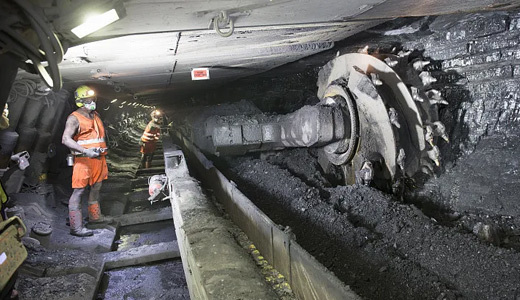








Concepts of several forces related to bolting
Release time:
2019-08-27
Author:
Source:
Concepts of several forces related to bolting
1 Definition
Anchoring force: refers to the binding force of the anchor rod on the surrounding rock, which includes the radial anchoring force and the tangential anchoring force, and the radial anchoring force includes the anchoring force and the anchoring force.
The anchor force is the radial support force exerted by the support plate to prevent the displacement of the surrounding rock into the roadway;
The anchoring force is the radial force exerted by the anchor rod on the surrounding rock through the binder;
Tangential anchoring force is the limiting force generated by the sliding and opening of the weak surface of the rock mass when the anchor body penetrates through the weak surface of the rock mass; unit kN.
Pulling force: refers to the force that prevents the bolt from pulling out of the rock mass. Drawing force can be dividedDesignPull-out force and detect pull-out force. Generally speaking, the pulling force refersDesignDrawing force, which shall be greater than breaking force of anchor rod; unit: kN.
Anchor bolt pre-tightening force: the axial tension exerted on the bolt body during the installation of the bolt, in kN.
Anchor bolt pre-tightening torque: the torque applied to the anchor bolt nut during the installation of the anchor bolt, in N · m.
Anchor prestress: the axial tensile stress applied to the anchor rod body during the installation of the anchor rod is equal to the ratio of the preload of the anchor rod to the cross-sectional area of the rod body, in MPa.
2 Methods of measurement
2.1 Anchoring Force Test
Anchoring force of anchor rod is generally carried out by dynamometer. At present, ML-20 type/ML-30 type anchor rod tension meter is generally used underground.
Installation of dynamometer process:
① Check the fluid pressure gauge oil pipe joint in the workbench of the tension gauge;
② The anchor rod connecting rod (internal thread) is directly sleeved on the thread of the anchor rod end, and the thread screwed in is not less than 30mm;
③ Install the sleeve, the sleeve is close to the anchor rod tray, then install the jack (one end of the telescopic cylinder is outward, close to the nut), and tighten the nut with a wrench;
④ Connect the oil pipe to the jack
Top;
⑤ Tighten the switch knob;
⑥ Press the operating handle with force at a constant speed, pay attention to the pressure gauge at all times until the designed anchoring force stops, and slowly turn on the switch to relieve the pressure.
Note:
(1) Select the position where the rock and coal at the pallet are leveled without crushing;
(2) The backing plate shall be flat and rigid as far as possible;
(3) The exposed length of anchor bolt thread is between 25~40mm, and the anchor bolt and the coal rock surface should be vertical; the center line of the anchor bolt body of the connecting rod of the jack axis is consistent;
(4) Before pressurization, check the integrity of the dynamometer (working medium pipeline pressure gauge twist jack, etc.);
(5) The anchor rod dynamometer shall be pressurized evenly and slowly until the anchor rod is loose or the pressure gauge reads to the design anchoring force value of the anchor rod, and the destructive test is generally not performed;
(6) When the jack is depressurized, slowly loosen the switch knob;
(7) During the pressure test, no one shall be allowed 3m near the inspected anchor rod;
(8) If the resin anchor rod is measured half an hour after installation, the measured value shall be multiplied by the 1.3 coefficient;
(9) The anchor rod anchoring force test shall beSecurityProtectionMeasures.
2.2 bolt drawing force detection
Anchor rod pullout gauge is the most commonly used instrument for detecting anchor rod pullout force. At present, several kinds of anchor puller commonly used in our country are MLJ-300/100 type anchor puller, MJY-1 type nondestructive anchor force detector, ZY series anchor puller, etc.
There are the following requirements for anchor rod drawing test:
The anchor pull-out experiment is completed in the underground roadway using an anchor pull-out meter;
The test site should be selected in the underground roadway construction site or similar surrounding rock;
The anchor rod and anchoring agent used in the test shall be the same as the materials used in the formal construction;
The equipment and drilling parameters used in the test shall be the same as those in the formal construction;
The test shall be in the form of short anchorage (e. g. 150~200mm long anchorage) in order to test the bond strength of the anchorage;
The test is a destructive test, pull out until the anchor rod fails, and record the load and the displacement of the anchor rod tail during the test;
According to the maximum load and displacement curve,AnalysisThe anchorability and anchoring effect of the surrounding rock make a judgment on the feasibility of the application of bolt support.
The anchor rod pull-out test must be carried out again in any of the following cases:
The design of bolt support is changed;
Change of supporting materials;
The geological conditions of the surrounding rock of the roadway have changed greatly, such as faults, fracture zones, wrinkles and other geological structures, and the roof of the roadway has a large drenching water.
2.3 Anchor Preload Torque Test
Generally, a torque wrench is used to detect the preload of anchor rod. The detection of anchor preload shall meet the following requirements:
One group (3 pieces) of top members of each small shift shall be sampled for torque detection of anchor bolt nuts. The pre-tightening torque of each nut shall meet the design requirements;
If one nut torque in each group is not qualified, another group (3) shall be randomly checked. If any unqualified nuts are still found, all nuts in this class will be re-tightened and overhauled.
3 The relationship between several confusing forces.
Difference between 3.1 anchorage force and drawing force
(1) Anchoring force is the binding force of the bolt on the surrounding rock, which is the force that limits the deformation of the surrounding rock and plays a supporting role. The pull-out force of the anchor rod is the limit load that can be withstood during the pull-out test after the anchor rod is anchored, which reflects the maximum pull force of the anchor rod breaking or failure after the rod body, anchor agent and rock are bonded together.
(2) The anchoring force increases with the deformation of the supporting surrounding rock and the expansion of the surrounding rock, so the anchoring force is a dynamic development and changing force. The pull-out force of the anchor rod is a fixed value, which does not change with the deformation of the surrounding rock and the force of the anchor rod. If the surrounding rock does not deform and the relaxation effect of the rod is not considered, the anchoring force is equal to the initial anchoring force.
(3) Anchoring force detection uses an anchor dynamometer installed between the anchor nut and the tray. Generally, the anchor dynamometer is installed when the anchor is installed. The anchorage force is detected to monitor the force condition of the anchor rod and requires long-term observation. The pull-out force of the anchor rod is detected by using an anchor rod tension meter. The detection can be carried out at any time after the installation of the anchor rod. The pull-out force of the anchor rod is detected to check the anchor rod body, anchoring agent and rock bonding effect. In construction, when detecting the pulling force of anchor rod, it is generally only necessary to reach the design anchoring force. When doing destructive testing, it is required that the anchor rod is broken or pulled out before termination.
(4) When checking the construction quality of anchor rod, generally check the pulling force of anchor rod. MonitoringAnalysisMeasure the anchoring force when the anchor rod is working. The measurement of anchoring force is to verify the reliability of the support and provide a basis for future modification of the support design. During design and construction, the basic principle that the pulling force of the anchor rod is greater than the breaking force of the rod body must be ensured, that is, when the force of the anchor rod body exceeds its breaking force, the anchor rod may be broken, but the anchor rod cannot be pulled out. A common mistake is that the designed bolt pull-out force is less than the rod breaking force.
3.2 the relationship between pre-tightening force and pre-tightening moment
(1) The simplified relation between anchor bolt preload and preload torque is: M = k t d, where m is preload torque, n m; K is the proportional coefficient, t is the preload force, kN; D is the diameter of the rod body, mm; The proportional coefficient k is a comprehensive coefficient, it is affected by the thread angle, pitch, the friction coefficient of the screw pair and the friction coefficient of the nut and the supporting surface, so it is the key to determine the relationship between the pre-tightening force and the pre-tightening torque.
(2) The pre-tightening force is the force, which is the pulling force applied to the anchor rod (anchor cable), in kN; the pre-tightening torque is the torque, which is applied to the compression nut, in N · m.
(3) the two measuring instruments are different. The pre-tightening force can be observed by the anchor rod dynamometer installed between the anchor rod tray and the nut; with attention, the service professional pre-tightening torque can be observed by digital display or anchor rod torque wrench with scale display.
(4) Anchor bolt construction design requires pre-tightening force, not pre-tightening moment. However, in the actual construction, because the preload torque is convenient to measure and read, the preload force is relatively complex, and the preload force increases with the increase of the preload torque. In order to facilitate the detection, the purpose of indirectly detecting the preload of the anchor rod is achieved by directly detecting the preload torque. Therefore, when the anchor rod is installed, the preload torque is usually detected, and the preload force is not detected.
Difference between 3.3 preload and prestress
Anchor preload force: the axial pulling force exerted on the anchor rod body during the installation of the anchor rod.
Anchor prestress: the ratio of anchor preload to the cross-sectional area of the rod body.
The role of 4.1 anchoring force
The anchoring effect of the anchor rod is reflected in the role of radial and tangential anchoring forces. The radial anchoring force exerts confining pressure on the surrounding rock, which transforms the surrounding rock from one-way and two-way stress state to two-way and three-way stress state, and improves the stability of the surrounding rock. The anchor rod penetrates the weak surface in the same rock layer, and the tangential anchoring force improves the mechanical properties of the weak surface, thus improving the mechanical properties of the surrounding rock. Therefore, the bolt is both support and reinforcement of the two functions of the more perfect form of support. The radial anchoring force mainly plays the role of support, and the tangential anchoring force mainly plays the role of reinforcement. In the surrounding rock of coal roadway, the radial anchoring force plays a role and plays a supporting role. Specific performance for the following aspects:
(1) the role of reinforced arch. For the massive or fractured surrounding rock cut by the criss-cross weak surface, if the anchor reinforcement is used in time, the shear strength of the rock structure can be improved, and a reinforcement arch can be formed within a certain thickness range around the surrounding rock, which can not only maintain its own stability, but also prevent the upper surrounding rock from loosening and deformation, so as to maintain the stability of the roadway.
(2) suspension effect. Suspension action means that the anchor rod suspends the weak rock or dangerous rock that will fall from the upper solid and stable rock, and the anchor rod bears the weight of the dangerous rock or weak rock.
(3) the role of composite beam. In the roadway roof of the layered rock layer, a series of anchors are anchored into the thin rock layer within the length of the anchor to form a certain composite beam, thereby improving its bearing capacity. The layered rock roof of a flat-roofed roadway can be regarded as a superimposed beam with the two branches of the roadway as the fulcrum. Under the action of load, each rock layer has its own individual bending moment, and each layer of rock is in compression and tension state respectively. The bending strength and bearing capacity of the composite beam are greatly improved after the rockbolt combines the layers of rock together.
The role of 4.2 preload
(1) the pre-tightening force can play the role of anchor active support, especially in the layered rock, broken surrounding rock conditions, increasing the pre-tightening force can change the nature of the surrounding rock, prevent the destruction of the surrounding rock, maintain the stability of the surrounding rock, is conducive to the surrounding rock support.
Anchor preload has a decisive effect on the stability of the roof. When the pre-tightening force is large to a certain extent, the roof separation layer within the length of the anchor rod and above the length of the anchor rod can be eliminated.
The high preload anchor is designed to establish the prestressed roof, the existence of the prestressed roof to a certain extent to protect the roof from the damage of horizontal stress, so that the roof rock layer is in a state of lateral compression, in order to overcome the influence of high level stress on the stability of the roof.
(4) The formation of the prestressed structure is conditional, and the anchor preload is the key. Under the condition of large horizontal stress, the function of anchor rod is to provide high prestress to the top plate in time to form a prestressed top plate and form a pressure self supporting structure.
Key words:
Next Page
Next page: