-
-
-
-
Honor

-
-
-
-
-
Contact

-








Treatment Measures of Underground Dust -- YiKuang Science and Technology
Release time:
2020-03-03
Author:
Source:
According to data from the National Health and Family Planning Commission, in 2017, a total of 27420 cases of occupational diseases were reported nationwide, including 24206 cases of pneumoconiosis. The number of reported cases of pneumoconiosis accounted for 88.28 of the total number of reported cases of occupational diseases in 2017, most of which were distributed in the coal industry. By the end of 2016, the cumulative number of pneumoconiosis reported nationwide has exceeded 700000 cases, accounting for 90% of occupational diseases. Mine dust, as one of the five underground natural disasters, not only endangers the health of workers, but also has the risk of explosion. With the mechanization and automation of coal resources mining is getting higher and higher, the amount of coal dust is also increasing, and the development of coal
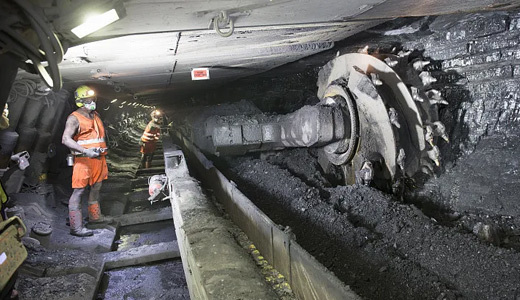
According to data from the National Health and Family Planning Commission, in 2017, a total of 27420 cases of occupational diseases were reported nationwide, including 24206 cases of pneumoconiosis. The number of reported cases of pneumoconiosis accounted for 88.28 of the total number of reported cases of occupational diseases in 2017, most of which were distributed in the coal industry. By the end of 2016, the cumulative number of pneumoconiosis reported nationwide has exceeded 700000 cases, accounting for 90% of occupational diseases. Mine dust, as one of the five underground natural disasters, not only endangers the health of workers, but also has the risk of explosion. With the increasing degree of mechanization and automation of coal resources mining, the amount of coal dust generation is also increasing. It is more urgent to carry out the research on the theory of coal dust explosion and the improvement of coal dust prevention and control devices. There are still 5 million workers engaged in coal production in our country every day. How to ensure the health and safety of coal industry practitioners is an important guarantee for the sustainable development of coal industry. It is understood that pneumoconiosis is the biggest threat to the health of coal workers, and it is also the most serious occupational disease in China. At present, the annual death toll of pneumoconiosis in China has exceeded the death toll of coal mining enterprises. It is worth noting that the number of pneumoconiosis in China is on the rise, with about 20000 new cases per year. Up to now, a total of 727000 cases and 150000 deaths have been reported nationwide. The coal industry accounts for about 61% of pneumoconiosis patients in the country. Therefore, pneumoconiosis is also called "invisible mine disaster".
The causes of dust hazards are as follows: first, there are no dust prevention measures or measures are not implemented, the wind speed of mining working face and other roadways is too high, and comprehensive dust prevention measures such as wet drilling and coal seam water injection are not taken; Second, there is no spray sweeping device in the mining working face, no spray is started, coal dust around the roadway is cleaned irregularly, no spray dust suppression device in the transfer point or spray dust suppression device does not work; third, there are no spray dust reduction facilities in the blasting inlet and return air lanes. Fourth, personal protective measures are not in place, and the operators do not wear dust masks or dust masks.
Traditional Dust Control Technology in 1. Coal Mine
Spray sprinkler technology Spray sprinkler technology depends on the nature of water quality and dust, the relative speed of water droplets and dust, and the dispersion of objects. The lower the purity of water, the greater its viscosity is bound to be, and the difficulty of being separated will also increase, thereby reducing the degree of adhesion between water droplets and dust; the greater the relative speed of water droplets and dust, the powerful power generated during collision will It will be more powerful to break the surface tension of water and enhance the capture ability; if the dispersion of the object is too high, the water droplets will be too small and the capture ability will be reduced.
Ventilation and dust removal technology Ventilation and dust removal is an important way of mine dust removal. It is a method of diluting and discharging dust in the mine with the help of wind. After various dust removal technologies, there will still be some fine dust with a diameter of less than 10um in the mine. These small dust need to be discharged from the mine under the action of appropriate wind. Generally, when the wind speed in the roadway reaches 0.5 m/s, the fine dust in the mine will be discharged. For larger dust, larger wind power is required, but the maximum wind speed cannot exceed 4 m/s.
Coal dust pre-wetting water injection technology uses coal electric drill to inject high pressure water into the original coal seam to make it penetrate the coal seam. The primary coal body is wetted before it is excavated and crushed, which avoids the coal dust flying in the mining process and reduces the dust source. By water injection wrapping the coal body, water enters between the fracture of the coal body and the coal seam, thus reducing the flying of coal dust during coal mining. Water injection can change the physical and mechanical properties of coal, weaken the brittleness of coal and enhance the plasticity, which makes the coal more plastic deformation during mining and crushing, and reduces the probability of coal crushing into dust particles. Common water injection methods are shown in the table:
Application and Development of 2. Foam Dust Removal Technology
Foam dust removal is a newly developed high-efficiency dust removal technology. It not only consumes less water and is easy to operate, but also is more suitable for mine dust control in our country at this stage. The technology uses dust removal water pipes and pressure air pipes, adds a certain amount of additives to the water pipes, introduces pressure air through a special foaming device, and generates high-expansion foam, which is sprayed to the dust source through a nozzle, the foam acts on the dust through good coverage, wetting and adhesion, which fundamentally prevents the dust from spreading and effectively reduces the dust concentration in the air. Compared with wet dust suppression, the water consumption of this technology can be reduced by 30 ~ 80%, and the dust removal efficiency is 3~5 times higher than that of spray water. The mine foam dust suppression system consists of a box and foam generation equipment (MFD-IA01), a foam distributor (MFD-IA02), a foam nozzle and a bracket (MFD-IA03).
Technical features
(1) The foam can cover the cutting drum of the fully mechanized excavator without gaps, so that the cutting is completed in the foam body, and the outward diffusion of dust is fundamentally prevented;
(2) After the liquid forms foam, the total volume and total surface area are greatly increased, which increases the probability of collision with dust and improves the dust reduction efficiency;
(3) The liquid film of the foam contains special additives, which can greatly reduce the surface tension of water and rapidly increase the speed of dust wetting;
(4) The foam has good viscosity, and the dust will be quickly adhered to the foam after contact with the foam;
(5) For high-gas mines, foam-covered cutting rollers can effectively suppress sparks caused by cutting and prevent gas and coal dust explosions;
(6) less water consumption, to avoid the water mist dust water consumption caused by the settlement of the machine, improve the work efficiency;
(7) The main equipment is fixed with strong magnets, which is convenient for installation, disassembly and maintenance.
(II) main application areas
Foam dust removal technology is suitable for the prevention and control of dust disasters in coal mine mining working face, belt conveyor transfer point, tunnel excavation construction and other places with narrow space.
(1) Dust production of coal mining face. The main dust production procedures of coal mining face include shearer coal dropping, coal loading, coal transportation, hydraulic support shifting, transportation and reprinting, artificial coal urging, blasting and coal caving at coal caving mouth, etc;
(2) Dust generation of tunneling face. Dust production process of tunneling face mainly includes mechanical coal breaking, loading, blasting, bolting and shotcreting, etc;
(3) Dust production in other locations. The anchor spray site of roadway maintenance and the loading and unloading points of coal also produce high concentrations of mine dust, especially the instantaneous mine dust concentration at the coal loading and unloading points, sometimes even reaching the limit of coal dust explosion concentration. So far, most of the domestic mine dust is still mostly used in wet operations, that is, spray sprinkling technology and coal seam pre-wet water injection technology. The fine particles in the coal dust, especially the coal dust with a diameter of less than 10um, the inhibition effect is limited, the dust reduction effect is not good, and the water consumption is large, which affects the calorific value of the coal.
Key words:
Measures, dust, foam, technology, coal dust, dust removal, spray, mine, produce, pneumoconiosis